How artificial intelligence is reshaping global fiber infrastructure – and why efficient fiber installation matters more than ever.
Artificial intelligence is transforming industries, businesses and everyday life. From advanced data centers and cloud computing to intelligent applications, AI is creating new demands for fast, reliable and high-capacity connectivity. But behind this digital revolution lies something far more physical: fiber optic infrastructure.
Fiber networks carry enormous amounts of data between data centers, businesses and communities. As AI continues to evolve, the need for reliable connectivity and network capacity becomes increasingly important. And while technology moves forward at extraordinary speed, one essential task remains firmly in the physical world.
Someone has to install the fiber.
AI Is Driving Demand for Fiber Networks
The growing demand for artificial intelligence is accelerating investments in data centers and the networks connecting them.
According to research published by the Fiber Broadband Association and RVA in 2025, long-haul and data center interconnection fiber route lengths in the United States are projected to nearly double between 2024 and 2029, increasing from approximately 95,000 to 187,000 miles. Over the same period, the total length of individual fiber strands is forecast to grow from approximately 159 million to 373 million fiber miles.
These figures represent projected infrastructure requirements rather than confirmed construction, but they illustrate the scale of the changes taking place. The study identifies three major areas of additional fiber demand: upgrading existing routes, connecting new data centers and establishing new long-haul connections.
For the fiber industry, this means more than simply increasing network capacity. It also highlights the importance of efficient construction methods, experienced installation teams and equipment capable of handling different project requirements.
US FIBER INFRASTRUCTURE · 2024–2029
The infrastructure behind AI
Fiber route length
+97%
2024: 95,000 miles
2029: 187,000 miles
Total fiber length
+135%
2024: 159 million fiber miles
2029: 373 million fiber miles
Source: Fiber Broadband Association / RVA (2025).
Forecast values presented in miles and rounded.
Route length measures network corridors;
total fiber length counts individual fiber strands.
US FIBER DEMAND · FORECAST TO 2029
Where will the new fiber go?
Projected additional fiber miles across
three infrastructure categories.
51%109M fiber miles
Existing route upgrades
31%66M fiber miles
New data center connections
18%38M fiber miles
New long-haul routes
Source: Fiber Broadband Association / RVA (2025).
Forecast figures presented in fiber miles and rounded.
The original category values total approximately
213 million fiber miles.
Fiber miles count individual fiber strands,
not cable-route distance.
Read the research →
A Global Transformation: Europe and Asia Are Growing Too
The demand for AI infrastructure extends far beyond the United States.
Across Europe, established data center markets such as Frankfurt, London, Paris and Amsterdam continue to expand. In Asia-Pacific, cities including Tokyo, Singapore, Hong Kong and Sydney are experiencing growth supported by AI, cloud computing and digitalization.
According to CBRE’s Global Data Center Trends 2026 report, data center inventory increased by 18.9% year-over-year across four major European markets during the first quarter of 2026. The corresponding increase across four major Asia-Pacific markets was 13.4%.
Looking further ahead, JLL forecasts that global data center capacity could reach approximately 200 gigawatts by 2030, with the Americas, Asia-Pacific and EMEA all contributing to the expansion. AI and cloud computing are major drivers of this development, although regional growth rates and infrastructure requirements vary.
Importantly, data center expansion does not translate directly into an equivalent amount of new fiber cable. However, it reinforces the importance of reliable, high-capacity connections between facilities and the wider telecommunications infrastructure.
GLOBAL DATA CENTER OUTLOOK · 2030
AI infrastructure is growing worldwide
Projected data center IT capacity across
major global regions.
109GW
Americas
57GW
Asia-Pacific
34GW
EMEA
Source: JLL, 2026 Global Data Center Outlook.
Forecast for 2030, not confirmed capacity.
EMEA includes Europe, the Middle East and Africa.
Figures describe data center IT capacity,
not fiber installation volume.
Read the report →
The Challenge: Turning Network Demand Into Physical Infrastructure
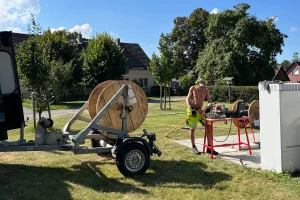
Building fiber optic networks requires much more than selecting the right cable. Every installation involves practical considerations, including cable diameter, duct dimensions, installation distance, route conditions and available compressed air.
As networks expand and existing infrastructure is upgraded, contractors must manage different cable types, duct systems and installation environments. Fiber blowing technology plays an important role in this process.
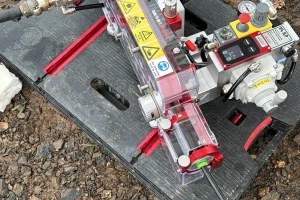
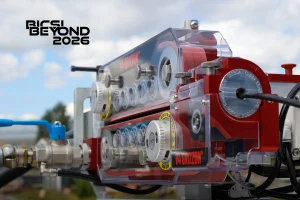
By combining controlled mechanical feeding with compressed air, fiber blowing machines allow installers to introduce fiber optic cables into suitable duct systems. When correctly planned and executed, the method can provide an efficient solution for new installations and network expansions.
But successful fiber blowing is not simply about achieving the highest possible speed. Airflow, pressure, friction, duct condition and cable characteristics all influence installation performance.
The right equipment, combined with the right experience, makes the difference.
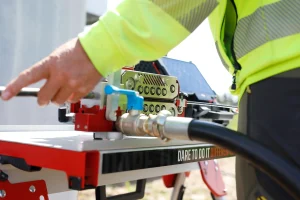
Subducting in action.
The Jetting V4 Grizzon® installs multiple microducts
inside a larger duct, helping contractors expand
fiber infrastructure efficiently while making use
of existing duct capacity.
Why Installation Efficiency Matters
For fiber installation contractors, productivity involves the entire working process. Preparing equipment, connecting ducts, adjusting settings, completing the installation and moving between locations all affect the time required to finish a project.
Reliable, easy-to-operate equipment can help reduce unnecessary interruptions and make daily work more efficient. Versatility is equally important. Contractors may work with small fiber cables one day and significantly larger cables the next. Equipment designed for different applications can provide greater flexibility while reducing the need for multiple specialized machines.
The Fiber Broadband Association’s US forecast illustrates another important point: future infrastructure development involves both upgrading existing routes and creating new connections. These activities can present different installation challenges, making adaptable equipment and well-planned working methods valuable across a wide range of projects.
Jetting – Supporting the People Building Fiber Networks
At Jetting, our focus is on developing practical, reliable fiber blowing machines that help installers work efficiently and with greater control. Different installation projects require different capabilities.
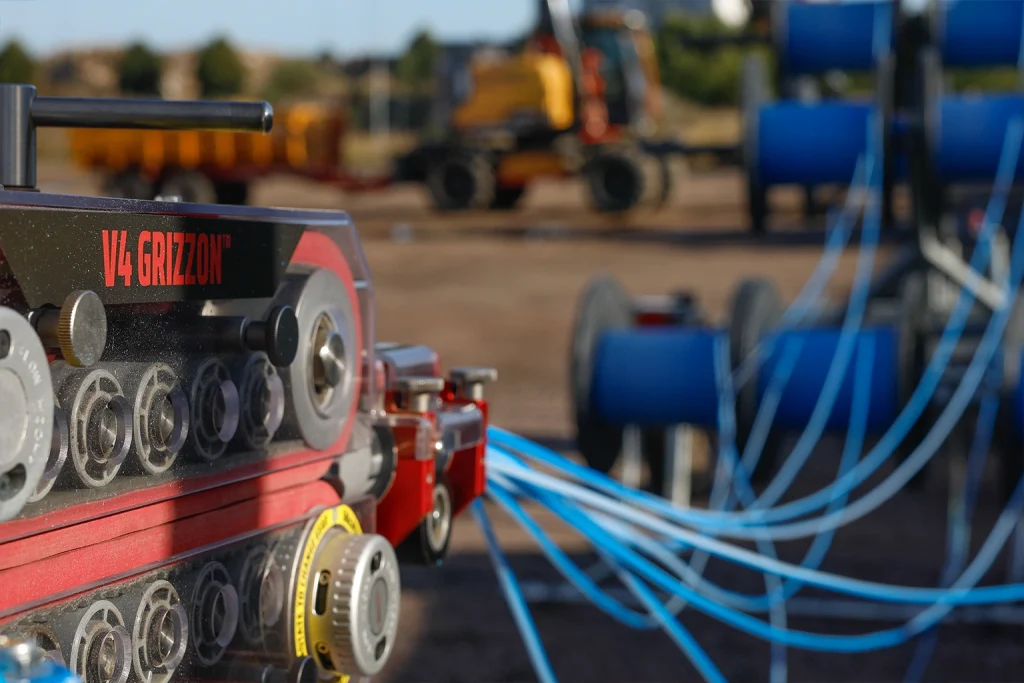
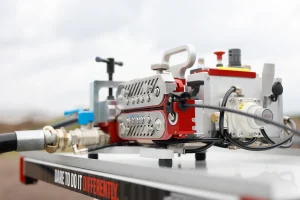
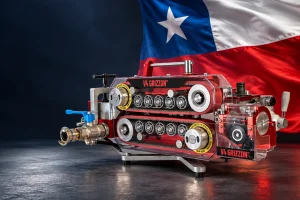
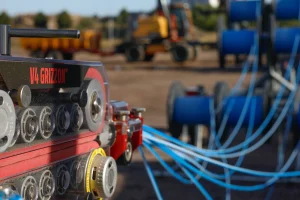
The compact Jetting V2 is designed for a wide range of fiber installation applications, combining portability with controlled cable feeding. For larger cables and more demanding installations, the V4 Grizzon® offers a dual-gear system, allowing operators to select between higher speed and greater pushing force depending on the application.
Accessories and installation methods such as subducting and floating can further expand the range of applications supported by compatible equipment. Installation documentation is another important part of professional fiber network construction.
With Jetlogger, key installation parameters can be recorded, helping contractors document their work and support quality control. Whether installing new fiber cables or expanding existing duct infrastructure, our goal remains the same: to make fiber installation easier, more controlled and efficient.
Building the Infrastructure Behind Tomorrow's Technology
Artificial intelligence is one of several forces shaping the future of digital infrastructure. Cloud services, broadband expansion, connected industries and increasing data consumption are also driving network development worldwide.
As demand grows, efficient installation methods and reliable equipment will continue to play an important role. At Jetting, we believe the people building these networks deserve tools developed around the challenges they face every day.
Because behind every technological breakthrough, there is physical infrastructure that makes it possible. And behind that infrastructure, there are people building it.
AI may shape the digital future. But skilled installers and the right equipment help build the fiber networks that support it.
Sources & Further Reading
01
Fiber Broadband Association & RVA
(2025)
The Underappreciated Need to Enable AI
and Data Center Growth: Increased and
More Strategic Fiber Interconnections.
Research on projected US fiber infrastructure
requirements associated with AI and
data center growth.